
Forecasts
Assumptions and Expectations

Reasonable expectations. That’s what’s on my mind. And what fuels the creation of unreasonable expectations? For me, it’s likely anxiety. The weather offers a great study.
Have you met weather? It defies precise prediction. Yet, folks get upset, including me sometimes, when the forecast doesn’t match reality. Or my fixed understanding of the forecast doesn’t show up.
Why? The forecast alerts us that life as we know it, life as we expect it, will be disrupted. Life, barely manageable most days, will be disturbed, routines hijacked, priorities shifted. People at the edges of the “forecasted” weather, the uncertainty causes different stresses and anxiety: to prepare or not to prepare? Then, the images on the weather map capture our understanding, no longer listening to the ranges and scales and predictive nature - the image fixes in our minds.
This fixing happens pretty naturally, right? A picture is worth 1,000 words, after all. But the words that go with the image are important; the context of the predictive map is necessary to understand the whole idea. Maps with county lines create expectations that nature will honor the administrative lines drawn by the state. When Mother Nature doesn’t, people get upset.
In preparation for a trip to Nicaragua in 2014, I obtained the necessary vaccinations at a travel clinic. The nurse presented a map showing the districts of the country. The district adjoining the one I visited had diagonal lines through it. She began saying that the lines represented malaria and that there was an outbreak, she couldn’t require it but… I stopped her. Of course, the mosquitoes that spread malaria don’t honor the boundary lines. A wave of relief passed over her face. I didn’t expect her to justify it or give me a solid answer.
Life has so few clear answers, really. What are the expectations we create in our lives that aren’t really fixed? Travel to Atlanta and believe that you can get where you are going without factoring in traffic? That’s a recipe for disaster if you are fixed on being on time. Just like no one should expect mosquitoes to respect artificial barriers. And the clouds don’t even notice I-20 as they pass south and drop snow contrary to the weather predictions.
Where do I set expectations about people’s behavior based on my assumptions? Are these reasonable? Shouldn’t I consider a range of behaviors rather than one fixed outcome? Assumptions function really as expectations of behavior.
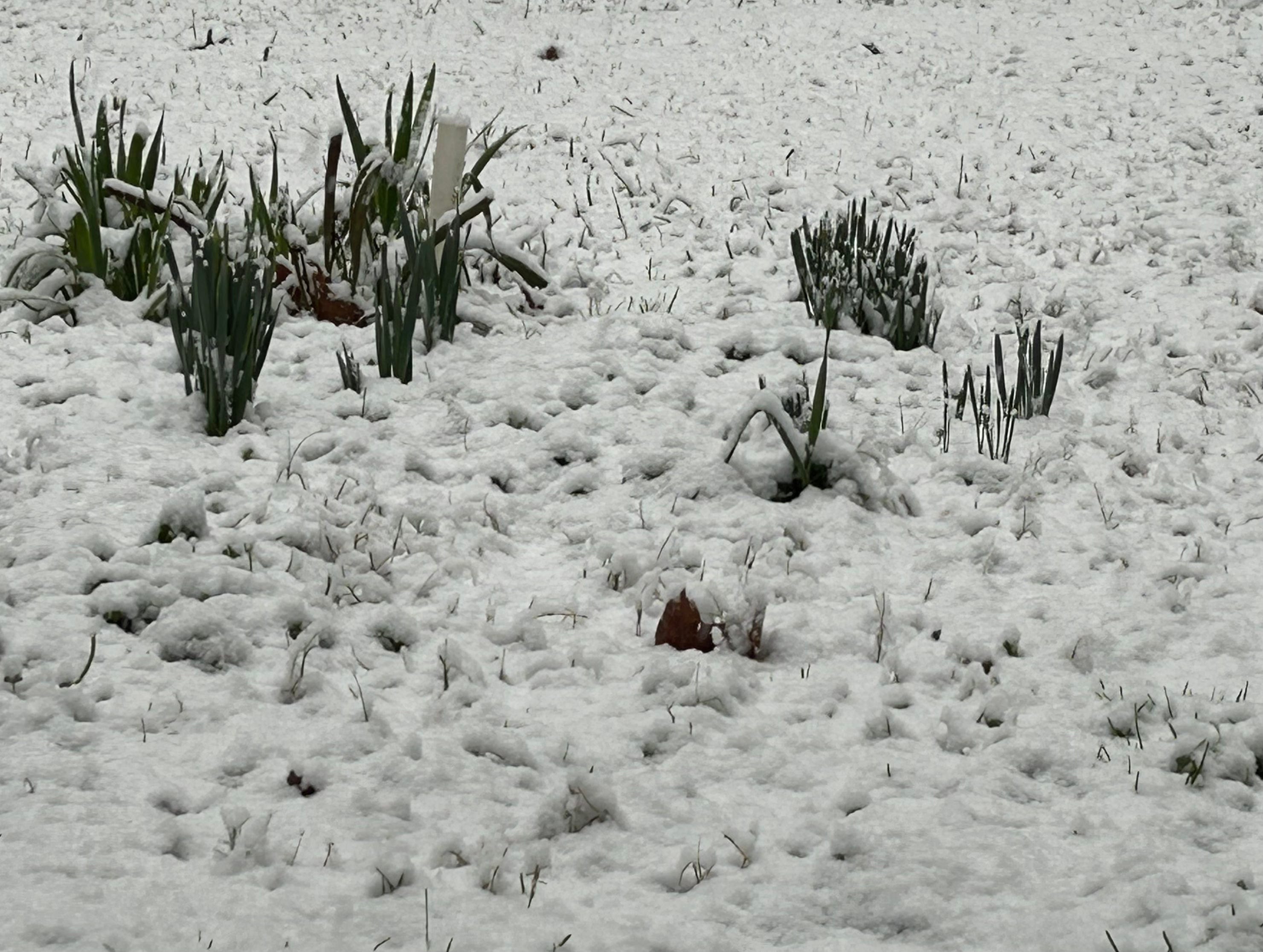
When it comes to weather forecasts, there’s a fair amount of hype. The constant barrage of predictions from folks who consider themselves experts based on weather models and prediction data interpreted by media-paid meteorologists, university professors, and self-taught officianados creates attention and demands energy. And people get so ground in about the predictions that we forget, it’s not real, it’s an educated guess.
And life is really just an educated guess based on historical data (life experience), information gathered, and our own patterns. Anxiety, though, is a pattern we can change if we choose.
No, I don’t know how much it snowed at the house. I’m not going to measure it. This is not a competition. Who had “three weekends with snow or ice in January” on their 2026 bingo card? Ultimately, we listened to the weather people. Prepared for snow. We got snow. Either way, there’s food and a plan. And my anxiety, that anticipatory anxiety, didn’t help. It was useless. Assuming the worst or the best rarely works out for weather or much else. Maybe it’s time to recognize when we fix on an outcome and try figuring out how to let that go.